
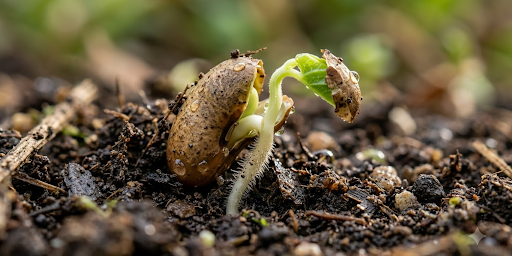
Getting moisture right is the single biggest factor in a reliable seed germination test. Too little and the seed never finishes imbibition. Too much and the seed suffocates or rots. This guide covers what the right moisture level looks like, how to measure it, and how to keep it steady, whether you work in a seed testing lab in Hyderabad or a nursery elsewhere in India.
Quick Answer: How Much Moisture Does Germination Media Need?
Germination media should be uniformly damp, never waterlogged. In practice:
- Germination paper: wet to saturation, then drain until no water drips and no film of water shows around the seed.
- Sand: about 50% of its water-holding capacity for most crops, and about 60% for large-seeded legumes (the commonly followed ISTA guideline).
- Soil or soilless mix: moist enough to clump slightly when squeezed, without releasing water.
The goal is a steady supply of water to the seed and enough air in the media for the embryo to breathe.
Why Moisture Matters So Much in Seed Germination
Germination starts with imbibition, the rapid uptake of water by a dry seed. Water activates enzymes, softens the seed coat and triggers growth of the radicle (the first root). Each stage needs the media to keep supplying water.
Moisture also affects oxygen. A seed is a living organism, and once it wakes up its respiration rate rises sharply. Water-filled pores in the media block oxygen. That is why overwatered seeds often fail even though they have “all the water they need.”
Too little moisture causes:
- Slow, uneven or stalled germination
- Seedlings that dry out after the radicle emerges
- Falsely low germination percentages
Too much moisture causes:
- Poor oxygen supply and suffocated seeds
- Fungal and bacterial growth
- Rotting seeds and abnormal, glassy seedlings
How Much Water Do Different Germination Media Hold?
Germination Paper
Paper is the most common medium in seed testing because it is clean, uniform and easy to score. Quality germination paper suppliers make paper with consistent thickness, good absorbency and no toxic residues, and those properties make moisture control much more predictable.
How to moisten it:
- Soak the paper fully in clean water (distilled or low-salinity tap water).
- Let the excess drain for a few seconds.
- Place the seeds and, for rolled-towel tests, roll the paper loosely.
The paper should feel evenly wet and cool, not dripping. If you squeeze it lightly and water beads out, it is too wet. As a rough benchmark, well-made paper holds a few times its dry weight in water when saturated, which is why a standard-grade absorbent paper works so well for uniform tests.
Sand
Sand does not hold water as paper does, so moisture is calculated against its water-holding capacity (WHC). For most species, moisten to roughly 50% of WHC. Large-seeded legumes such as beans and peas are usually tested at around 60%. Use clean, graded, sterilised sand and mix thoroughly so there are no dry pockets.
Soil and Soilless Mixes
For nursery trays and field-style tests, aim for a mix that holds together when squeezed lightly but does not release water. Peat, cocopeat and vermiculite blends hold moisture well, though they can stay wet too long in cool, humid weather.
Seed Size and Type Change the Moisture Demand
Not every seed needs the same amount of water:
- Small seeds (tomato, brinjal, chilli) are sensitive to excess water. A thin water film can stop oxygen reaching them, so keep the media only just wet.
- Large seeds (maize, beans, cotton) take up more water and tolerate slightly wetter media.
- Hard-coated seeds (some legumes and vegetables) may need extra imbibition time or pre-treatment.
- Oily seeds (groundnut, sunflower) are more prone to rotting in wet media, so do not overwater them.
If you test different crops regularly, setting up a short reference sheet by crop saves a lot of rework.
How to Check Whether Moisture Is Right
Use these simple checks in the first 24 to 48 hours:
- Squeeze test: for soil or sand, squeeze a handful. It should hold shape without dripping.
- Touch test: for paper, the surface should be wet to the touch with no shiny water film.
- Weight method: weigh the tray or towel set at the start, then re-weigh each day. A sudden drop shows you need to rewet.
- Visual check: condensation inside the cover is normal, but pooled water or visible mould is not.
Common Moisture Mistakes (and How to Fix Them)
Mistake 1: Over-soaking the paper. Drain it properly before placing seeds.
Mistake 2: Letting the media dry out mid-test. Check daily and mist or rewet lightly. Once a seed starts germinating, a drying-out can kill it.
Mistake 3: Uneven moisture. Uneven wetting gives patchy germination counts. Mix sand and soil thoroughly, and use paper of uniform quality.
Mistake 4: Using poor-quality water. Salty or contaminated water harms seeds. Clean or distilled water is the safest option.
Mistake 5: Ignoring temperature. Moisture and temperature work together. Warm conditions dry media faster, so check more often in summer.
Moisture Tips for Indian Climate Conditions
India’s climate swings are large, and they directly affect how often you need to rewet:
- Hot, dry months (April to June): media dries quickly, especially in cities like Hyderabad. Check more often and keep trays covered or in a humidity-controlled space.
- Monsoon (July to September): high humidity slows evaporation, so overwatering becomes the bigger risk. Reduce water and watch for mould.
- Winter: cooler temperatures slow germination. Moisture lasts longer, but the seeds take more time.
- Air-conditioned labs: AC can dry the air and paper faster than expected. Cover trays or use a germinator with controlled humidity.
Keeping a small daily log of media moisture, temperature and room humidity makes results more repeatable.
Choosing the Right Germination Paper for Better Moisture Control
Paper quality has a large effect on how evenly water spreads and how long it stays. When evaluating germination paper suppliers, look for:
- Consistent thickness and basis weight
- Good wet strength, so the paper does not tear when rolled
- Free of chemicals or residues that might harm seeds
- Uniform, controlled absorbency
- Suitability for standard methods such as between-paper and top-of-paper tests
As a specialty paper manufacturer based in Hyderabad, Laxmi Industries produces seed germination paper made for these requirements and supplies seed labs, research institutions, seed companies and agricultural businesses across India. Using a dependable paper means your moisture readings are consistent from batch to batch, which is exactly what you want in a test.
Conclusion
The right moisture level for germination media is “evenly damp, not wet.” Saturate and drain paper, hold sand at 50 to 60% of water-holding capacity depending on seed type, and keep soil mixes moist but airy. Check often, adjust for the weather, and use quality media so your results are accurate and repeatable. If you are looking for reliable seed germination paper, visit Laxmi Industries to explore options built for labs and growers across India.
Frequently Asked Questions (FAQs)
1. How wet should germination paper be for seed germination?
It should be fully saturated and then drained until it no longer drips. The paper should feel evenly wet with no visible water film around the seeds.
2. How often should I add water to germination media?
Check at least once daily. Rewet lightly if the paper or media feels dry. In hot, dry weather you may need to check more often.
3. What happens if germination media is too wet?
Excess water blocks oxygen, encouraging rot, mould and abnormal seedlings. Small and oily seeds are the most vulnerable.
4. What happens if germination media is too dry?
Seeds may not complete imbibition, germinate unevenly, or die after the root emerges. This can give a falsely low germination percentage.
5. How much water should sand hold for a germination test?
Most seed tests use sand at about 50% of its water-holding capacity, and large-seeded legumes about 60%.
6. Can I use tap water for germination tests?
Clean, low-salinity tap water is usually fine, but distilled water is safer, especially if your water is hard or contaminated.
7. Does the type of germination paper affect moisture?
Yes. Paper thickness, absorbency and wet strength affect how evenly and how long moisture is held. Good paper gives more consistent results.
8. Where can I buy germination paper in Hyderabad or across India?
You can order from specialty manufacturers such as Laxmi Industries (laxmipaperind.com), which supplies seed germination paper to labs and agri businesses in Hyderabad and across India.
9. How do I know if my germination media has the right moisture without a scale?
Use the squeeze test: the media should hold its shape without releasing water. For paper, it should be wet to the touch but not dripping.
10. Does temperature change how much moisture germination media needs?
Indirectly, yes. Higher temperatures dry the media faster, so you need to check and rewet more frequently, while cool conditions keep media wet for longer.