
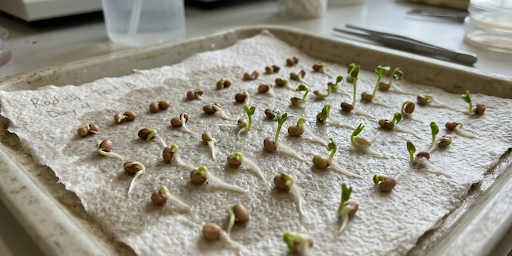
Choosing between rolled and flat sheet germination paper looks like a small decision, but it affects how your seeds are placed, how moisture is held, how seedlings grow and how easily you can score results. This guide explains the difference, when to use each and how to pick the right option for your lab, nursery or seed company in India.
Quick Answer: Rolled Paper vs Flat Sheet Germination Paper
Rolled germination paper is supplied as a continuous roll or used in the rolled-towel method: seeds sit on moistened paper that is then rolled up and kept upright, so roots grow downward and shoots grow upward. Flat sheet germination paper comes pre-cut and is used flat, in Petri dishes, trays, boxes or between layers, and suits small seeds and top-of-paper tests.
In short:
- Rolled paper: better for large or medium seeds that need space for straight roots and shoots, and for tests where seedling shape is scored.
- Flat sheets: better for small seeds, light-sensitive seeds and fast, convenient setups.
What Is Rolled Germination Paper?
Rolled germination paper is a long, uniform roll of absorbent paper that you cut to length. In the rolled-towel method:
- Moisten two or more layers of paper.
- Place seeds at regular intervals along the paper.
- Cover with another layer and roll loosely.
- Stand the roll upright in a container or germinator.
The vertical position lets gravity guide the root down and the shoot up, which gives straight, easy-to-evaluate seedlings. This is why the method is popular for cereals, maize, rice, pulses and other medium to large seeds.
Key features of rolled paper:
- Supplied in rolls, so you can cut custom lengths
- Holds moisture evenly across a long surface
- Supports straight seedling growth when rolled upright
- Takes less incubator floor space than many flat setups
What Is Flat Sheet Germination Paper?
Flat sheet germination paper is pre-cut into standard sizes, such as circular discs for Petri dishes or rectangular sheets for trays. It is used in two main ways:
- Top of paper (TP): seeds are placed on the surface of a moist sheet, usually in a dish or box. This suits small seeds that need light or should not be buried.
- Between paper (BP) flat: seeds sit between two flat moist sheets in a tray or box.
Some labs also use pleated or folded sheets to give small seeds compartments and keep them separated.
Key features of flat sheets:
- Ready to use, with no cutting
- Easy to fit into Petri dishes and trays
- Good visibility for counting radicle emergence
- Convenient for small-scale and quick tests
Rolled vs Flat Sheet: Side-by-Side Comparison
- Format: rolled paper comes as a roll or is rolled after seeding, while flat sheets come in fixed sizes.
- Best seed size: rolled suits medium to large seeds, flat suits small to medium seeds.
- Seedling orientation: rolled gives vertical, gravity-guided growth, flat grows horizontally across the surface.
- Setup speed: flat sheets are faster to set up, rolled takes slightly longer.
- Moisture handling: rolled keeps moisture sealed in layers, flat sheets can dry faster at the exposed surface.
- Space use: rolled stands compactly, flat needs more tray or shelf area.
- Scoring seedlings: rolled makes root and shoot length easy to evaluate, flat is excellent for counting germination.
- Flexibility: rolled can be cut to any length, flat sheets are standard sizes.
When to Use Rolled Germination Paper
Rolled paper is the better choice when:
- You are testing medium or large seeds such as wheat, maize, rice, sorghum, chickpea or soybean
- You need straight seedlings to judge normal vs abnormal growth
- You are measuring seedling vigour, such as root and shoot length
- You test many seeds per sample and want to save incubator space
- Your lab follows the rolled-towel method in standard seed testing protocols
When to Use Flat Sheet Germination Paper
Flat sheets are the better choice when:
- You test small seeds such as vegetables, flowers, tobacco or forage grasses
- Seeds need light to germinate and should remain on the surface
- You want quick germination counts rather than detailed seedling measurement
- You work in Petri dishes or small trays
- You are doing research or educational demonstrations where visibility matters
Moisture Management: A Key Difference
Both formats need evenly damp paper, not dripping wet, but each behaves differently.
- Rolled paper traps moisture between the layers, so it loses water more slowly. The risk is overwatering, which can reduce oxygen and encourage mould.
- Flat sheets are open to the air and can dry sooner, especially in warm labs or AC rooms. They need more frequent checking and light rewetting.
In hot Indian summers, flat sheets in open dishes may need extra attention. During the humid monsoon, rolled setups can stay too wet if not drained properly.
Quality Matters More Than Format
Whichever format you choose, the paper itself determines how reliable your test is. Good germination paper should offer:
- Consistent thickness and basis weight
- Uniform, controlled absorbency
- High wet strength so it does not tear when moist or rolled
- Freedom from toxic chemicals or residues that could harm seedlings
- A texture that lets roots grow along the surface without penetrating or tangling
Poor paper can cause patchy moisture, torn rolls and misleading germination percentages, even when your technique is perfect.
How to Choose Between Rolled and Flat Sheet Paper
Ask these questions:
- What seed are you testing? Larger seeds usually favour rolled, smaller seeds favour flat.
- What do you need to measure? Vigour and seedling shape favour rolled, simple germination counts suit flat.
- How much space do you have? Limited incubator space favours rolled.
- How much volume do you test? High volume with custom lengths favours rolled, quick small batches suit flat.
- What protocol are you following? Check the standard method for your crop.
Many labs keep both formats in stock and choose per crop and test.
Choosing Reliable Germination Paper Suppliers
The right germination paper suppliers can make your testing more consistent and your life easier. Look for suppliers who offer:
- Both roll and sheet formats
- Custom sizes and cutting for your equipment
- Consistent quality from batch to batch
- Bulk supply for seed companies and research institutions
- Technical understanding of seed testing needs
- Dependable delivery across India
Laxmi Industries, a Hyderabad-based specialty paper manufacturer, produces seed germination paper along with filter paper, blotter paper and pollination bags for labs, breeders and seed companies across India. Because they manufacture specialty papers themselves, they understand how absorbency and strength affect seed testing. You can explore their range at laxmipaperind.com.
Common Mistakes to Avoid
- Using flat sheets for large seeds that need vertical growth
- Rolling too tightly, which restricts air and seedling growth
- Over-wetting rolled paper
- Letting flat sheets dry out in warm rooms
- Using low-quality paper that tears or releases residues
- Mixing formats within a single test, which makes results harder to compare
Conclusion
The main difference between rolled and flat sheet germination paper is how seeds are positioned and how seedlings grow. Rolled paper supports upright, straight seedlings and suits larger seeds and vigour tests, while flat sheets are convenient, visible and ideal for small seeds and quick counts. Choose based on your seed type, protocol and equipment, and always prioritise paper quality. For dependable supply in either format, talk to experienced germination paper suppliers such as Laxmi Industries and get paper matched to your testing needs.
Frequently Asked Questions (FAQs)
1. What is the main difference between rolled and flat sheet germination paper?
Rolled paper is used in rolls or rolled towels so seeds grow vertically, while flat sheets are pre-cut and used flat in dishes or trays, so seeds grow horizontally.
2. Which germination paper is better for large seeds?
Rolled germination paper is generally better for medium and large seeds such as wheat, maize and rice, because upright growth gives straight seedlings.
3. Which germination paper is better for small seeds?
Flat sheets work best for small seeds like vegetables and flowers, especially in Petri dishes or top-of-paper tests.
4. What is the rolled-towel method in seed testing?
It is a method where seeds are placed on moist paper, covered with another layer, rolled loosely and kept upright so roots grow down and shoots grow up.
5. Can I use flat sheets instead of rolled paper?
Sometimes, but it depends on the seed and the test protocol. Flat sheets may not give the same straight seedling growth for large seeds.
6. How wet should germination paper be?
It should be evenly damp, saturated and then drained until it does not drip, with no film of water around the seeds.
7. Does rolled paper hold moisture longer than flat sheets?
Usually yes, because moisture is trapped between the layers. Flat sheets are more exposed and can dry out faster.
8. What should I look for when buying germination paper?
Look for consistent thickness, uniform absorbency, good wet strength and freedom from chemicals that may harm seeds.
9. Where can I buy germination paper in Hyderabad or across India?
You can order from specialty manufacturers such as Laxmi Industries (laxmipaperind.com), which supplies seed germination paper to labs and agri businesses across India.
10. How do I choose reliable germination paper suppliers?
Choose germination paper suppliers who offer consistent quality, multiple formats, custom sizes, bulk supply and a good understanding of seed testing requirements.