
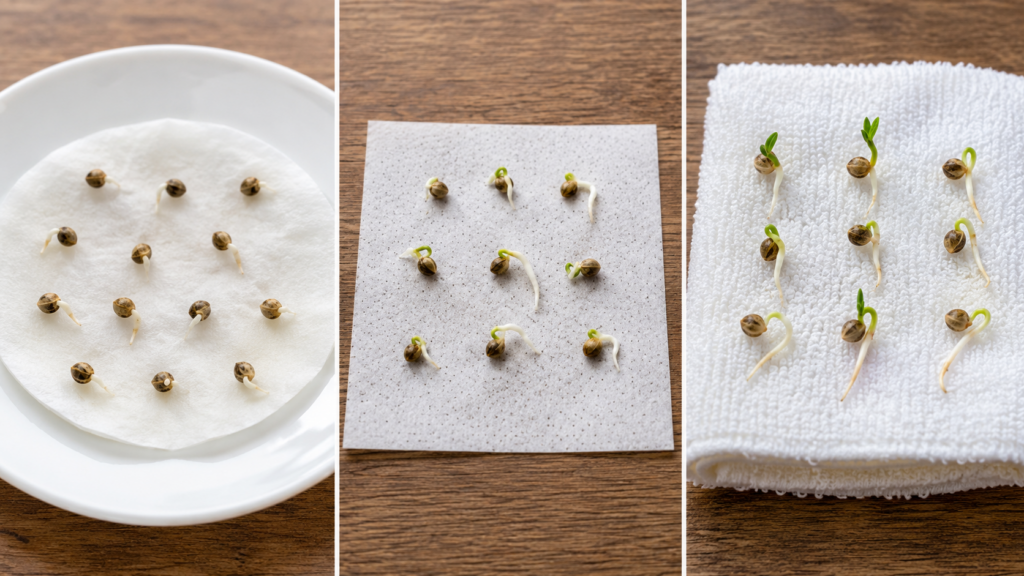
If you’re in the seed testing or agricultural industry, you already know that germination isn’t just about planting a seed and hoping for the best. It’s a science—a precise, measurable process that determines crop quality, yield potential, and commercial viability. And at the heart of that process lies one critical question: which germination substrate gives you the most accurate, reliable results?
Today, we’re breaking down three of the most widely used seed germination techniques—seed germination paper, blotter paper for seed testing, and the classic seed germination towel method—so you can make an informed choice for your lab or field operation.
Why Your Germination Substrate Matters More Than You Think
Before we compare methods, let’s get one thing straight: the medium you use for germination testing is not a minor detail. It directly affects moisture retention, aeration, fungal contamination risk, and — most importantly — the accuracy of your germination data.
Using the wrong substrate can lead to skewed germination percentages, missed seedling abnormalities, and ultimately, poor commercial decisions. Whether you’re testing wheat, rice, vegetables, or exotic species, choosing the right seed testing method is foundational to quality assurance.
1. Seed Germination Paper — The Lab Standard
Seed germination paper is the most widely recommended substrate by international seed testing associations like ISTA (International Seed Testing Association). It is a specially manufactured, absorbent paper designed to provide uniform moisture distribution, optimal aeration, and a sterile surface for seed germination. It comes in rolls or sheets and is made from cellulose fibres with no chemical additives that could inhibit germination.
Why it’s preferred:
Germination paper offers uniform moisture distribution with no dry patches or waterlogging. Its high porosity ensures oxygen reaches the seed, while its chemically inert composition means no pesticides, bleaches, or additives interfere with results. It’s also easy to monitor root development through and is fully compliant with ISTA and AOSA guidelines—making results standardised and internationally comparable.
Best for: Certified seed testing laboratories, export quality checks, seed banks, and any operation requiring reproducible results.
At Laxmi Industries, our seed germination paper is manufactured to meet precise GSM and moisture absorption standards, ensuring every test you run is consistent, clean, and reliable. Visit laxmipaperind.com to explore our range.
2. Blotter Paper for Seed Testing — When Moisture Control Is Key
Blotter paper for seed testing is another substrate prescribed by ISTA, particularly recommended for cereals, vegetables, and legumes where disease detection alongside germination is equally important. It is a thicker, highly absorbent paper that holds significantly more water than standard germination paper. Seeds are placed directly on top in petri dishes or germination trays.
Why it stands out:
Blotter paper’s high water retention makes it ideal for seeds needing sustained moisture. Its structure also supports the identification of seed-borne pathogens, making it uniquely valuable for disease detection alongside germination testing. Its thick build provides physical support for larger seeds as well.
Watch out for: Because blotter paper holds more moisture, it can occasionally create anaerobic conditions if over-watered, which may suppress germination in sensitive species. Careful temperature and humidity monitoring is essential.
Best for: Research laboratories, pathology testing, and crops where seed-borne disease identification is part of the quality protocol.
3. The Seed Germination Towel Method — Simple, Accessible, Practical
The seed germination towel method — sometimes called the “rag doll” or “rolled towel” method — uses moist paper towels or cloth towels to wrap seeds and test their viability. It is one of the oldest and most accessible seed germination techniques in use.
Seeds are placed between moistened paper towels, which are then rolled or folded and kept at the appropriate temperature. After the prescribed period, the towels are unrolled and the germination percentage is counted.
What makes it appealing:
It’s low cost, requires no specialised equipment, and can be set up quickly for a wide variety of seed sizes. No lab is needed — a plastic bag or tray at room temperature will do.
Its limitations are significant though: Towels can dry out unevenly, results vary between operators, regular paper towels may contain harmful chemicals, and the method is not suitable for any official certification testing.
Best for: Smallholder farmers, home gardeners, educational demonstrations, and quick pre-season viability checks.
Side-by-Side Comparison
| Feature | Seed Germination Paper | Blotter Paper | Towel Method |
| Accuracy | ★★★★★ | ★★★★☆ | ★★★☆☆ |
| ISTA Standardised | ✅ Yes | ✅ Yes | ❌ No |
| Moisture Control | High | Very High | Variable |
| Disease Detection | Limited | Excellent | Poor |
| Cost | Moderate | Moderate | Low |
| Lab Required | Yes | Yes | No |
| Best Use Case | Certification labs | Pathology labs | On-farm checks |
Which One Should You Choose?
For official seed certification and export quality testing → use seed germination paper. For seed health and pathology analysis → use blotter paper for seed testing. For quick, low-cost viability checks on the farm, the seed germination towel method gets the job done.
For most commercial seed companies and testing labs, seed germination paper remains the gold standard—offering the best balance of accuracy, standardisation, and ease of use.
Frequently Asked Questions
Q1. Is seed germination paper the same as blotter paper?
No. Seed germination paper is thinner, more porous, and designed for uniform moisture and aeration. Blotter paper for seed testing is thicker, holds more water, and is used when disease detection is also required. Both are prescribed by ISTA but for different crop types and testing objectives.
Q2. Can I use regular tissue paper or newspaper instead of germination paper?
Strongly not recommended. Regular tissue paper and newspaper often contain bleaches, inks, or fluorescent brighteners that can inhibit germination or distort results. Certified seed germination paper is chemically inert and purpose-built for this use. Substitutes may compromise your test entirely.
Q3. How do I know which substrate is right for my seed type?
The ISTA Rules for Seed Testing specify recommended substrates for hundreds of crop species. As a general guide, use germination paper for most small-seeded crops, blotter paper for cereals and disease-prone seeds, and the towel method only for informal, non-certified checks. When in doubt, consult the ISTA handbook or a qualified seed analyst.
Final Thoughts
Choosing between seed germination paper, blotter paper for seed testing, and the seed germination towel method isn’t about which is best in absolute terms—it’s about matching the right tool to the right task. For certified, repeatable, internationally recognised results, germination paper is the clear winner for most applications.
At Laxmi Industries, we manufacture high-quality germination and blotter papers engineered for the precise demands of modern seed testing. Trusted by seed companies, agricultural research institutions, and quality control labs across India and beyond.
Ready to upgrade your seed testing process? Visit laxmipaperind.com to explore our full range—or reach out for a custom requirement consultation.