
If you’ve ever walked through a large manufacturing facility or a busy warehouse, you’ve probably noticed things running like a well-oiled machine — conveyor belts humming, filters working silently, machinery moving in rhythm. But behind all that seamless efficiency are some often-overlooked components doing serious heavy lifting. One of them? Pleated strips.
Now, if you’re wondering what pleated strips have to do with efficiency — stick with us. Because once you understand how these simple-looking components work, you’ll see why industries from automotive to food processing swear by them.
What Are Pleated Strips, Anyway?
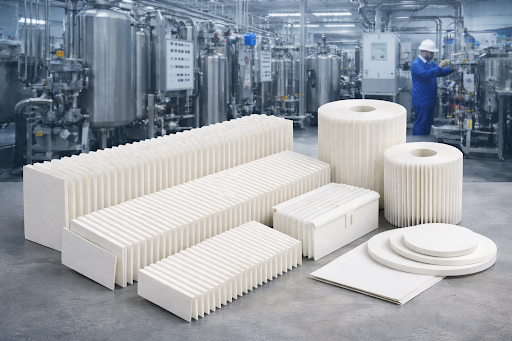
Let’s start from the basics. Pleated strips are specially designed strips — often made from paper, fabric, foam, or composite materials — that are folded in an accordion-style pattern to create a larger surface area within a compact space. Think of it like folding a piece of paper back and forth. The total length stays the same, but you’ve now packed a lot more surface into a smaller footprint.
This design is used in filters, seals, gaskets, edge protectors, packaging, and a whole lot more. The pleating is what gives these strips their superpower — versatility and performance packed into a deceptively simple form.
The Real Efficiency Gains — Here’s Where It Gets Interesting
When we talk about efficiency in industrial operations, we’re really talking about three things: less waste, less downtime, and lower costs. Pleated strips help with all three — here’s how.
1. More Surface Area = Better Performance: This is the big one. Because pleated strips are folded, they pack far more surface area into the same physical space compared to a flat strip. In filtration systems, for example, more surface area means the filter can capture more particles before it needs to be replaced. That directly translates to fewer filter changes, less maintenance time, and more uninterrupted production hours.
2. Longer Service Life: Because pleated strips distribute load and contact more evenly across their surface, they tend to wear out more slowly. Whether they’re being used as seals between machine parts or as edge guards on packaged goods, that extended lifespan means you’re replacing parts less often. For a facility running around the clock, this is a significant cost saver.
3. Better Sealing and Protection: The flexibility of pleated strips makes them excellent at conforming to irregular surfaces. In machinery, this means better seals against dust, moisture, and contaminants — all of which can cause costly equipment failures if left unchecked. When machines stay clean and protected, they run better and last longer.
Industries That Can’t Imagine Working Without Them
Pleated strips aren’t a niche product for one industry — they show up across the board. In the automotive sector, they’re used in air and oil filters to keep engines running clean. In HVAC systems, pleated air filters are practically the industry standard because of how effectively they trap dust, allergens, and fine particles. In packaging and logistics, pleated edge strips protect goods from damage during transit. Even in pharmaceutical and food processing plants, where contamination control is non-negotiable, pleated strips play a critical role in maintaining clean environments.
What all of these industries have in common is the need for reliability. When a component fails in a production environment, it rarely fails quietly — it usually takes down a whole system with it. Pleated strips, by being more durable and efficient than their flat counterparts, reduce those failure points.
Cost Savings That Actually Show Up on the Balance Sheet
Let’s be honest — no industrial manager is going to swap out a component just because it looks smart on paper. The case for pleated strips ultimately comes down to numbers. And the numbers are pretty compelling.
Fewer replacements mean less spending on parts. Longer service life means fewer maintenance shutdowns. Better sealing means less energy wasted compensating for leaks or contamination. And when you add it all up across a full year of operations, the savings from switching to high-quality pleated strips — like those produced by Laxmi Industries — can be quite substantial. We’ve seen clients cut their filter maintenance frequency nearly in half just by upgrading to properly spec’d pleated strips.
Choosing the Right Pleated Strip for Your Operation
Not all pleated strips are created equal, and getting the wrong one can actually hurt efficiency rather than help it. The key factors to consider are the material (paper, synthetic, composite), the pleat depth and density, temperature and chemical resistance requirements, and the specific application — whether it’s filtration, sealing, or edge protection.
At Laxmi Industries, we work closely with clients to understand their specific operational demands before recommending a product. Because a filter strip that works beautifully in a cold storage facility might be completely wrong for a high-temperature manufacturing line. Getting this right from the start saves a lot of headaches down the road.
Quality Matters More Than You Think
There’s a temptation in industrial procurement to go for the lowest price, especially for what seem like minor components. But pleated strips are one of those cases where cutting corners on quality can end up costing you far more than you saved. Low-quality strips can collapse, clog faster, or fail to seal properly — and any of those outcomes puts you right back at square one, except now you’re also dealing with the downstream damage.
That’s why at Laxmi Industries, we put our manufacturing process through rigorous quality checks. Every pleated strip that leaves our facility meets the consistency and durability standards that our clients in demanding industries have come to rely on. When you’re running operations at scale, you need components you can trust — not components that might work.
The Bottom Line
Pleated strips might not be the most glamorous topic in industrial operations, but they’re absolutely one of the most impactful. Better filtration, longer service life, improved sealing, reduced maintenance — these aren’t small wins. They compound over time into real operational and financial advantages.
If your facility is still using flat strips or hasn’t evaluated its pleated strip suppliers recently, it’s worth having a conversation. You might be surprised at how much efficiency is sitting on the table.
Ready to upgrade your industrial efficiency?
Get in touch with the team at Laxmi Industries today. Visit us at laxmipaperind.com to explore our range of pleated strips and find the right solution for your operation. Let’s build something more efficient — together.