
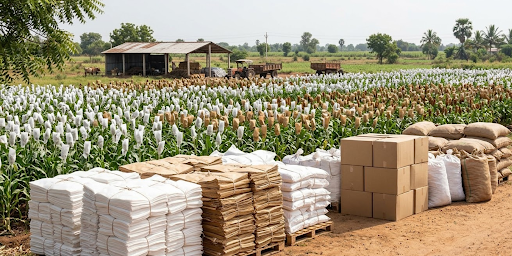
Buying a few bags for a trial plot is easy. Buying thousands for a full crossing season is a different job. Quality, consistency, size options, delivery timelines and price all matter when you order at scale. This guide explains where to buy pollination bags in bulk in India, what to check before placing an order and how to avoid common sourcing mistakes.
Quick Answer: Where to Buy Pollination Bags in Bulk in India
You can buy pollination bags in bulk in India from three main sources:
- Direct manufacturers: specialty paper manufacturers that make bags to your size and strength requirements, usually offering the best consistency and bulk pricing.
- Agri-input distributors and wholesalers: useful for standard sizes and smaller bulk orders.
- Online B2B marketplaces: convenient for comparing quotes, though quality can vary widely.
For breeding programmes and seed production, buying from a dedicated manufacturer is usually the most reliable route, since you can specify material, size and quantity and get the same quality in every batch.
Why Bulk Buying Matters for Crop Breeding
Controlled pollination is time-sensitive. Silks, tassels and flowers become receptive within narrow windows, and you cannot wait for a missing shipment. Buying in bulk helps you:
- Secure supply before the crossing season starts
- Maintain uniform quality across all plots and replications
- Lower the cost per bag compared with small purchases
- Plan ahead for replacements after rain, wind or damage
- Avoid mid-season stock-outs that can ruin crosses
What Are Pollination Bags for Crops Used For?
Pollination bags for crops protect flowers, tassels or ears from unwanted pollen, insects and weather. Common uses include:
- Maize: tassel bags to collect pollen and shoot bags to protect silks
- Rice and wheat: covering panicles or spikes for selfing and controlled crosses
- Cotton: protecting flowers during hybrid seed production
- Vegetables: covering tomato, brinjal, chilli, cucurbit and okra flowers
- Sorghum and millets: covering heads to maintain line purity
- Research plots: keeping genetic material isolated during trials
The bag type, size and strength differ by crop, so your supplier should be able to match the product to the use.
Types of Pollination Bags You Can Buy in Bulk
Kraft Paper Bags
Strong, breathable and economical, kraft bags are the most common choice for field crops like maize. They are available in plain and wet-strength versions.
Glassine Bags
Smooth, semi-translucent and moderately moisture-resistant, glassine bags let you see inside without removing the cover. They suit small flowers and delicate crosses.
Wax-Coated or Wet-Strength Bags
These resist rain and humidity better than plain paper, making them a strong choice for monsoon crossing.
Non-Woven and Synthetic Bags
Reusable and durable, but they need good breathability to avoid heat and condensation inside.
What to Check Before Ordering Pollination Bags in Bulk
Before you commit to a large order, review these points:
- Material and thickness: match the paper to your crop and weather conditions
- Wet strength: essential if your crossing window overlaps with the monsoon
- Size and shape: the bag should cover the structure without crushing it
- Seam quality: strong, well-glued or folded seams prevent splitting
- Breathability: some air exchange prevents internal heat and moisture build-up
- Chemical-free material: residues can harm pollen or flower tissue
- Consistency: each batch should match the sample you approved
- Packaging: bags should arrive dry, flat and undamaged
Always Ask for a Sample First
Request a sample before placing a bulk order. Test it on a few plants and check:
- Does it fit the ear, tassel or flower properly?
- Does it hold up to dew or light rain?
- Does it stay in place with your chosen closure?
- Does it tear when handled?
- Does it cause overheating on hot days?
A short trial can save you from receiving thousands of bags that do not suit your crop.
Questions to Ask Pollination Bags Suppliers
The right pollination bags suppliers will answer these clearly:
- What is your minimum order quantity (MOQ)?
- Can you make custom sizes and specifications?
- What materials and strengths do you offer?
- What is your lead time for bulk orders?
- Can you supply the same quality repeatedly across seasons?
- Do you deliver across India, and how is the packaging handled?
- Can you share samples and product specifications?
- Do you offer volume-based pricing?
Reliable suppliers will be open about specifications and timelines. Be cautious if answers are vague or samples are not available.
Buying Options Compared
- Direct manufacturer: the best for custom sizes, consistent quality and bulk pricing, but it usually has a defined MOQ.
- Local distributor or wholesaler: quick access to standard sizes, though customisation is limited.
- Online marketplace: easy comparison and fast ordering, but quality and specifications need more checking.
- Retail agri shops: convenient for small quantities, though it is not cost-effective for large programmes.
Timing Your Bulk Order for the Indian Crop Calendar
India’s crop calendar affects when you should order:
- Kharif season (June to October): order well before the monsoon, ideally two to three months ahead, and consider wet-strength bags.
- Rabi season (October to February): place orders before sowing so bags arrive before flowering.
- Summer crops and off-season nurseries: plan around flowering dates, and choose breathable bags for hot conditions.
- Seed company production cycles: book supply early, as demand peaks around the same windows.
Ordering late often means rushed delivery, limited stock and higher costs.
Tips for Storing Bulk Pollination Bags
Large quantities need proper storage to stay usable:
- Keep bags in a dry, cool, closed space
- Avoid direct sunlight and damp floors
- Store in original packaging or sealed containers
- Keep them away from pests and rodents
- Use older stock first
- Label boxes by size, type and batch
Humidity weakens paper before the bags reach the field, so storage matters as much as sourcing.
Buy Pollination Bags in Bulk from Laxmi Industries
Laxmi Industries is a Hyderabad-based specialty paper manufacturer that supplies pollination bags to breeders, research institutions, seed companies and agricultural businesses across India. Because the company works with specialty papers such as seed germination paper, filter paper and blotter paper, it understands how paper behaves with moisture, strength and handling, and that experience carries over into bag quality.
What buyers can expect:
- Bulk supply for breeding programmes and seed production
- Consistent quality across batches
- Options suited to different crops and conditions
- Delivery across India, including Hyderabad and surrounding regions
To enquire about sizes, specifications and bulk pricing, visit laxmipaperind.com.
Common Mistakes to Avoid When Buying in Bulk
- Ordering without testing a sample first
- Choosing the cheapest option without checking wet strength
- Picking a size that does not fit the crop
- Ordering too late for the crossing window
- Ignoring storage conditions
- Not confirming lead times and delivery terms
- Switching suppliers mid-season, which can change bag quality
Conclusion
If you are wondering where to buy pollination bags in bulk in India, the most dependable route is a direct manufacturer that can match material, size and strength to your crop and supply the same quality every time. Test samples, ask the right questions, order ahead of the season and store bags properly. For breeders and seed companies looking for reliable pollination bags for crops, Laxmi Industries offers bulk supply from Hyderabad to buyers across India.
Frequently Asked Questions (FAQs)
1. Where can I buy pollination bags in bulk in India?
You can buy pollination bags in bulk from specialty paper manufacturers, agri-input distributors and B2B marketplaces. Direct manufacturers such as Laxmi Industries (laxmipaperind.com) typically offer the best consistency and bulk pricing.
2. How do I choose reliable pollination bags suppliers?
Look for pollination bags suppliers who offer samples, consistent quality, custom sizes, clear MOQs, dependable delivery and transparent specifications.
3. What is the minimum order quantity for bulk pollination bags?
It varies by supplier and bag type. Ask each supplier for their MOQ, and check whether it is lower for standard sizes than for custom ones.
4. Which pollination bags are best for crops like maize?
Kraft paper bags are widely used for maize tassels and ears. In wet seasons, wet-strength or wax-coated kraft bags are a better choice.
5. Can I get custom-sized pollination bags for my crop?
Yes, many manufacturers make custom sizes. Share your crop, structure size and closure method so the supplier can match the bag.
6. When should I place a bulk order for pollination bags?
Order two to three months before your crossing season, especially for kharif crops, so you have time for sampling, production and delivery.
7. Do pollination bags for crops need to be rainproof?
Not always. Dry-season crossing may be fine with plain kraft bags, but monsoon crossing benefits from wet-strength or wax-coated options.
8. How should I store pollination bags in bulk?
Keep them in a dry, cool, closed space away from sunlight, damp and pests, ideally in sealed boxes or original packaging.
9. Do suppliers deliver pollination bags across India?
Many do. Confirm delivery coverage, timelines and packaging with your supplier. Laxmi Industries, based in Hyderabad, supplies buyers across India.
10. Is it better to buy pollination bags online or directly from a manufacturer?
Direct manufacturers usually offer better consistency, customisation and bulk pricing. Online marketplaces are convenient but need extra checking of quality and specifications.