
Every farmer knows the anxiety of waiting. You’ve prepped your fields, chosen your seeds, and now everything depends on what happens in the first 48 hours of germination. But here’s something most people overlook—the medium in which a seed begins its journey matters just as much as the seed quality itself. That’s where germination paper becomes a quiet hero of modern agriculture and seed testing.
What Happens in the First 48 Hours of Germination?
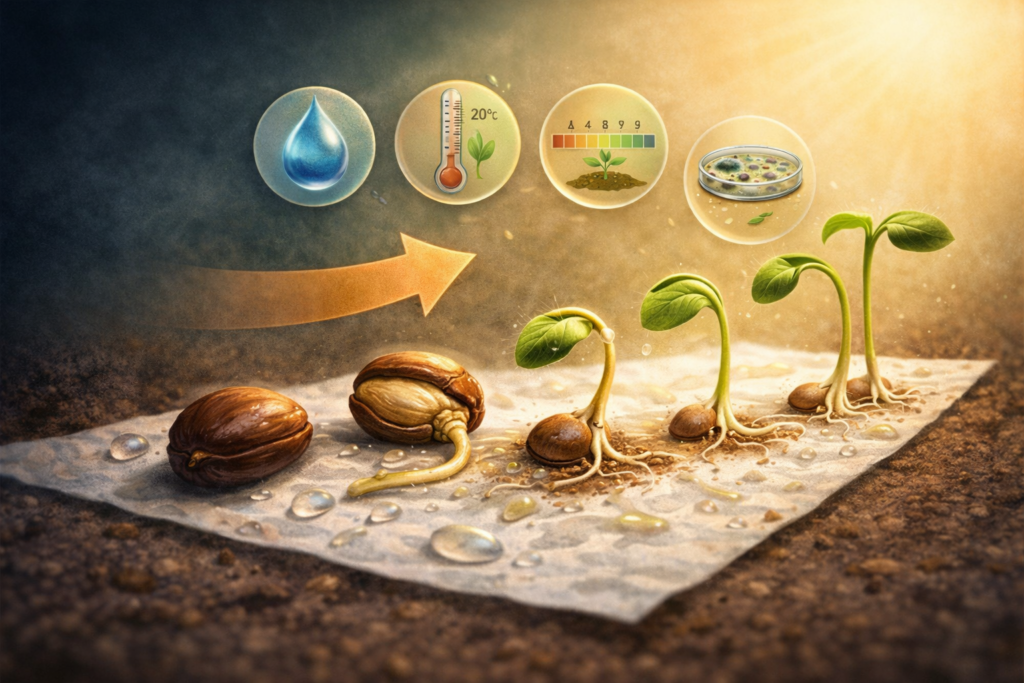
Seed germination is not just a biological event—it’s a race against time. The moment a dormant seed is exposed to moisture, temperature, and oxygen, it kicks off a cascade of internal reactions. Enzymes activate, stored starches convert to sugars, and the embryo begins swelling.
During the first 48 hours, the seed is at its most vulnerable. It has no established root system, no access to soil nutrients, and no structural support. All it needs at this stage is consistent moisture, adequate aeration, and a clean, contamination-free environment. This is precisely where the quality of your seed germination blotter paper makes or breaks the outcome.
Understanding Seed Dormancy and Why It Matters
Before we talk about germination paper, it helps to understand what the seed is waking up from. Seed dormancy is nature’s built-in pause button—a survival mechanism that keeps seeds from sprouting at the wrong time or in unfavorable conditions.
For seeds emerging from dormancy, the transition is delicate. A sudden shift in moisture availability, temperature stress, or microbial contamination can re-trigger dormancy or kill the seedling entirely. High-quality germination paper acts as a buffer—providing steady, measured water availability that signals safety to the germinating embryo without overwhelming it.
What Makes Germination Paper Different from Regular Paper?
Not all paper is created equal, especially when living embryos depend on it. Standard paper can introduce problems: variable pH levels that interfere with enzyme activity, chemical residues from bleaching agents, or inconsistent fiber density that leads to uneven water distribution.
Germination paper is specifically engineered to meet strict botanical and laboratory standards:
- Controlled water absorption rate — ensures seeds receive moisture consistently, not all at once
- Neutral to slightly acidic pH — mimics natural soil conditions without chemical interference
- High wet strength—the paper doesn’t disintegrate when saturated, maintaining structural support for emerging radicles
- Toxin-free manufacturing — free from chlorine and other agents that could inhibit germination
- Uniform fiber structure — promotes capillary action across the entire sheet, leaving no dry patches
At Laxmi Industries, our germination blotter paper is manufactured using carefully selected raw materials that meet ISTA and AOSA testing standards — because accurate seed testing starts with a trustworthy substrate.
How Germination Paper Actively Supports Seedling Emergence
Think of germination paper less as a passive support and more as an active partner in seedling development. Here’s how it contributes during each phase of the critical first 48 hours:
Hour 0–6 (Imbibition Phase): The seed absorbs water rapidly through its coat. Germination paper’s uniform moisture distribution ensures the seed swells evenly, avoiding osmotic shock that can damage cell membranes.
Hour 6–24 (Activation Phase): Enzymes begin breaking down reserves. The paper’s neutral pH ensures these enzymatic processes aren’t disrupted by acidity or alkalinity.
Hour 24–48 (Emergence Phase): The radicle and hypocotyl begin to emerge. Wet strength becomes crucial here — low-quality paper may tear under the mechanical pressure of emerging roots, physically trapping the seedling.
Choosing the Right Germination Paper: What to Look For
When sourcing germination blotter paper for your seed lab or farm, evaluate these key specifications:
- GSM (grams per square meter): Higher GSM papers hold more water and maintain structure better for large seeds like maize or beans
- pH range: Look for papers with a pH between 6.0–7.5
- Wet tensile strength: Low-quality paper can lose up to 70% of its strength when wet
- Compliance certificates: ISTA-compliant germination paper will carry documentation confirming toxin-free manufacturing
At Laxmi Industries, we provide detailed technical specifications with every product so you can make confident decisions without guesswork.
Why Indian Seed Producers Are Paying More Attention to Substrate Quality
India’s seed industry is one of the fastest-growing in the world. As export demands rise and domestic quality standards tighten, seed companies across Andhra Pradesh, Telangana, Maharashtra, and Karnataka are investing heavily in quality verification — including standardizing their germination testing protocols.
Inconsistent or substandard germination paper leads to variable test results, which can result in batches passing internal checks but failing third-party audits. By sourcing certified germination blotter paper from trusted manufacturers like Laxmi Industries, seed companies gain test results they can stand behind.
Frequently Asked Questions
Q1. What is germination paper used for?
Germination paper is used as a moist substrate for seed germination testing in laboratories and farms. It provides a clean, pH-neutral, and consistently moist environment that supports seedling emergence and helps measure germination percentage accurately.
Q2. Is germination paper the same as blotter paper?
Yes, germination blotter paper and germination paper are often used interchangeably. Both refer to the same absorbent, toxin-free substrate designed specifically for seed testing as per ISTA standards.
Q3. Where can I buy ISTA-compliant germination paper in India?
You can source high-quality, ISTA-compliant germination paper directly from Laxmi Industries — one of India’s trusted manufacturers supplying seed labs and agri-input companies across the country.