
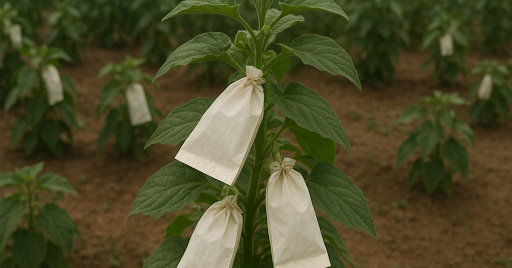
Pollination is nature’s way of helping plants reproduce—but in modern farming and plant breeding, letting nature take its own course isn’t always ideal. Whether you’re developing new hybrids, preserving genetic purity, or improving crop yields, pollination bags are indispensable tools in the agriculture toolkit. In this blog, we’ll explore the different types of pollination bags available today, their unique uses, and how they help farmers and researchers achieve better results in the field and laboratory.
As one of India’s reliable Pollination Bags suppliers, Laxmi Industries manufactures a range of high-quality pollination bags designed to meet diverse crop needs, environmental challenges, and precision breeding goals. Let’s dive into the world of pollination bags and see why they matter so much in modern farming
What are pollination bags?
Pollination bags are specialized covers placed over flowers, tassels, or panicles to prevent unwanted pollen from entering and to protect the desired pollination process. They help maintain genetic purity, avoid cross‑pollination, and shield delicate reproductive parts from wind, rain, insects, and birds.
Modern pollination bags are widely used in hybrid seed production, plant breeding programs, and agricultural research where precision and purity are essential. From crops like maize, rice, sorghum, and millets to vegetables and oilseeds, they support both self‑pollination and controlled cross‑pollination.
Why pollination bags matter in modern farming
Today’s farming is driven by quality and consistency, and every seed lot needs to meet strict standards. Pollination bags help achieve this by giving growers more control over which pollen reaches the flowers, reducing contamination and improving seed set.
They also add a layer of physical protection against harsh weather and pests, which is especially important in open‑field conditions and during critical flowering stages. For commercial seed producers and research institutes, using the right type of pollination bag translates directly into better germination, stronger plants, and higher returns.
Common types of pollination bags
Different crops and environments demand different pollination bag types. Understanding these options helps farmers and breeders make better decisions for their fields.
- Kraft paper pollination bags
Strong, multi‑layer kraft paper pollination bags are widely used in crops like sorghum and maize because they are sturdy, breathable, and cost‑effective. They provide good protection against wind and dust, though prolonged heavy rain or bird damage can still be a challenge in some conditions. - Synthetic and non‑woven pollination bags
Synthetic fibre or non‑woven pollination bags are designed for high durability, weather resistance, and excellent pollen proofing in modern breeding programs. These pollination bags perform better than traditional materials under intense sun, heavy rain, or long‑duration field trials, making them ideal for large‑scale hybridization. - Mesh and apertured film pollination bags
Lightweight mesh or apertured film pollination bags allow high airflow while still blocking insects and unwanted pollen, reducing issues like rot and mildew around the flowers. They are especially useful in hot and humid climates where ventilation is critical for healthy seed development.
How pollination bags are used in the field
Pollination bags support both selfing (self‑pollination) and controlled crossing, depending on how and when they are applied. In selfing, pollination bags are used to isolate a flower or panicle so it can be pollinated by its own pollen, preserving varietal purity and uniformity.
In controlled cross‑pollination, breeders emasculate the flower if needed, cover it with a pollination bag to exclude foreign pollen, and then introduce selected pollen manually before closing the bag again. This method is essential for creating new hybrids, testing parental lines, and maintaining breeder and foundation seed classes in seed production systems.
Benefits of modern pollination bags
Modern pollination bags bring several advantages over older, basic methods that often fail under stress.
- Better protection and pollen proofing
High‑quality pollination bags are engineered to block external pollen, insects, and dust while allowing enough air and light for normal plant development. This reduces genetic contamination and improves the proportion of filled, healthy seeds at harvest. - Durability and field efficiency
Advanced pollination bags are built to withstand wind, rain, and UV exposure, so they stay intact throughout the flowering period and sometimes across multiple cycles. Features like reinforced seams, strong closures, and tear‑resistant materials make them practical for large breeding nurseries and commercial seed plots. - Support for research and hybrid seed production
Research institutions, agricultural universities, and seed companies rely on pollination bags to conduct precise experiments and maintain pure lines. By reducing rework and seed loss, these bags directly support faster breeding cycles and more reliable hybrid development.
Types of pollination bags and their uses
| Pollination bag type | Main use in farming | Key advantages |
| Kraft paper pollination bags | Maize, sorghum, and other cereals for routine controlled pollination and selfing | Cost‑effective, strong, breathable, and easy to handle in bulk field operations |
| Synthetic | High‑precision breeding and hybrid seed production in harsh climates | Excellent pollen proofing, high durability, and strong resistance to wind, rain, and UV |
| Mesh / apertured film bags | Research plots and humid regions where airflow is critical | Superior ventilation, reduced risk of fungal growth, and good protection from insects |
How Laxmi Industries supports modern pollination
Laxmi Industries is a specialty paper and technical product manufacturer that supports agriculture with reliable, high‑performing solutions such as seed germination paper, filter paper, and pollination bags. The focus is on quality papers with good absorbency, balanced pH, and strong bursting strength, which are vital for consistent results in seed testing and controlled pollination workflows.
By combining quality manufacturing with application‑focused products, Laxmi Industries helps breeders, seed producers, and research farms upgrade from basic covers to dependable pollination bags. For agribusinesses looking to modernize their pollination and seed‑quality practices, partnering with a specialized manufacturer simplifies sourcing and ensures consistent performance season after season.
Ready to upgrade your pollination bags?
Choosing the right type of pollination bag can transform the way you manage self‑pollination, hybridization, and seed purity in your breeding and production plots. If you are planning new trials, expanding hybrid seed production, or simply want more reliable pollination control, explore suitable pollination bags and related specialty papers from Laxmi Industries and connect with the team for recommendations tailored to your crops and conditions.
Frequently Asked Questions (FAQs)
1Q. What are pollination bags used for?
Ans: Pollination bags are used to isolate flowers during pollination to prevent unwanted pollen contamination and control the fertilization process.
2Q. Can pollination bags be used for all crops?
Ans: Yes, different types of pollination bags are designed for various crops—from cereals like maize to vegetables, fruits, and research plants—depending on flower size and field conditions.
3Q. Are pollination bags reusable?
Ans: Some durable bags can be reused under careful handling, but single-use biodegradable paper bags are common for precise breeding and purity control.